Published: January 14, 2024
Updated: April 27, 2026
The Misconception About Productivity
We’re obsessed with productivity. We stack our to-do lists, download countless apps, and fill every hour of the day with tasks, believing that staying busy means getting more done. But research shows the opposite. Constant multitasking and task switching actually make us less productive, draining our focus and energy. Real productivity isn’t about doing more things or working longer hours. It’s about focusing on what truly matters—and achieving more by doing less.
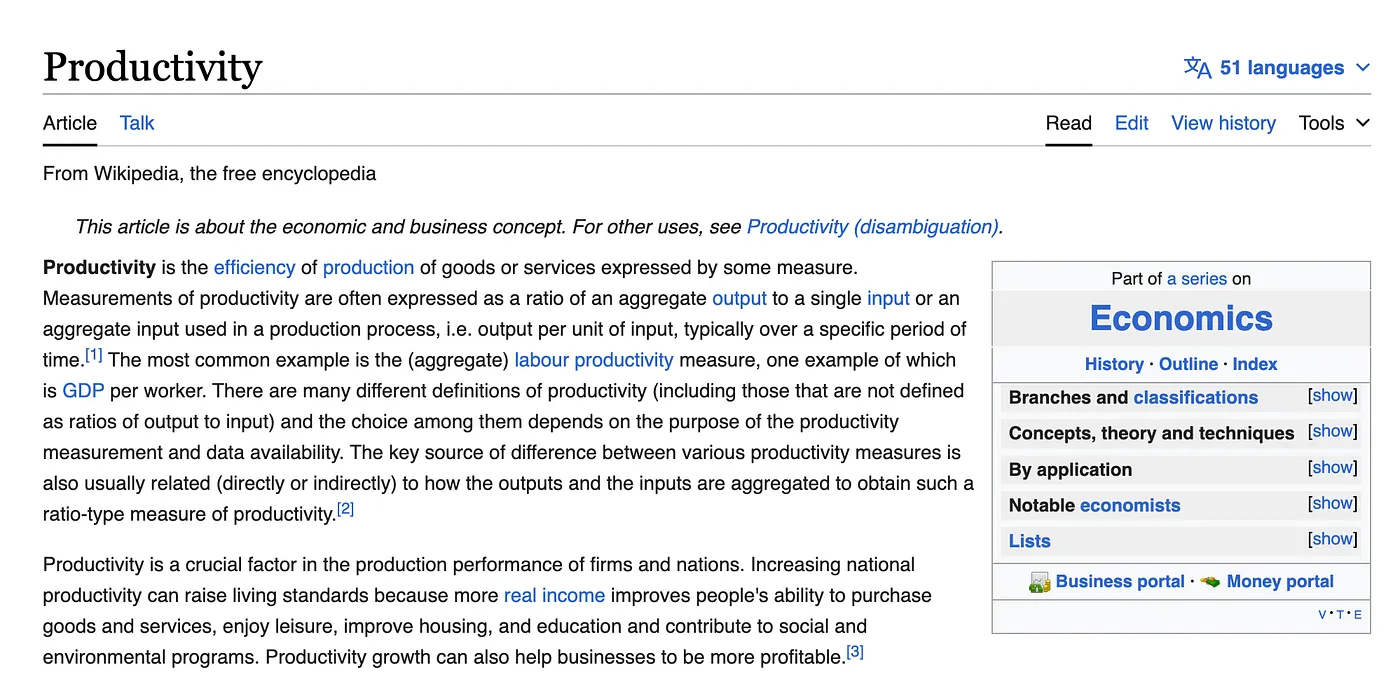
We’re all interested in this vague topic, which we call “productivity”. Do you even know what the word means?
Thomas woke up on Monday morning feeling restless. He grabbed his phone and opened all his productivity apps — his calendar, to-do list, habit tracker, and notes app. He liked to start each day by reviewing everything he had planned and wanted to accomplish.
Thomas prided himself on being productive. He was always multitasking, switching between projects and chores constantly throughout the day. He felt most productive when he was busy all the time—rest days made him feel lazy.
By Tuesday, Thomas was already feeling burnt out. He had so many tasks and goals every day, but could never seem to finish them all. At night, he would toss and turn, anxious about the endless to-do list he could never complete.
On Wednesday, Thomas plowed through his daily routine on autopilot. He was so tired, but powered through by drinking his 3rd coffee of the day. That afternoon, he accidentally deleted an important work presentation he had spent weeks preparing.
By the end of the week, Thomas was exhausted. He had sent emails riddled with typos, forgotten appointments, and missed deadlines. No matter how hard he tried to be productive, it felt like he was just spinning his wheels […]

We believe that by stacking tasks on our to-do lists, stuffing our days with endless work hours, and using 467 different “productivity apps”, we’re being productive.
But in fact, it’s debatable.
In 2001, Joshua Rubinstein, PhD, Jeffrey Evans, PhD, and David Meyer, PhD, conducted four experiments that involved young adults switching between different tasks.
Their findings revealed that participants who switched between multiple tasks were less productive than those who focused on a single task at a time. Essentially, the process of switching itself takes time but the cognitive process of adjusting to new tasks is where productivity suffers.
source: Venture Harbour
Productivity majorly means the act of achieving more in less. Working 24 hours a day doesn’t make you productive, it makes you dumb. When you’re using productivity apps like Habit Trackers to simply uncheck daily habits you’re trying to build, you just look like a fool. Checking your emails and DMs as soon as you wake up? Bleh
We tend to imitate other people, whom we idolize, to feel as productive as them. Only that this whole thing is nothing more than a waste of time.
Productivity is not about the apps, the emails, the endless hours put into work, or even going to the gym. Don’t even think that making your bed will make you productive by any means. Read Atomic Habits to understand the real purpose behind them small tasks.
It’s all about focusing on your health, mental and physical be it, and focusing on your happiness and relationships. All of that while maintaining consistent work hours and efficient systems, and again, achieving more in less.
So, here is the full blueprint for mastering real productivity.
1. Target your reward system.
via scoro.com
We all love habit trackers, and we all know the majority of us won’t even successfully build half our goal habits anytime.
Then, how to help yourself get stuck with a habit? you reward yourself.
A study led by some researchers; Katherine L. Milkman, Julia A. Minson, and Kevin G. M. Volpp wanted to see whether the right motivation would make college students visit the gym more often.
So they gathered together 226 students who were having trouble going to the gym as often as they would have liked to. Next, they broke the students into 3 groups:
Group One got an iPod loaded with popular audiobooks. They got it as a 10-week loan and were allowed to only listen to it in the gym
Group Two got the audiobooks for free, and they could load these to their iPods. They were encouraged to listen to the tracks in the gym but could also do it anywhere else.
Group Three was the control group. They got a gift certificate and were encouraged to hit the gym more often.
The audio novels included cool books such as The Hunger Games trilogy, the Da Vinci Code trilogy, the Twilight series, etc. — highly addictive books that are hard to put down.
Can you guess which group worked out the most?
It was Group One, the students that got the iPod as a loan and could only listen to it in the gym. They were a lot more motivated to work out as they had a reward accessible only while being physically in the gym. This led the first group to outperform the second one by 29% and the third one by 51%.
By physically restricting access to the tempting desire, the students got a 22% boost compared to their average productivity.

Article credits: Scoro.com
The reward system worked so well that when asked whether they’d like to keep paying to use iPods, 61% of the group members said yes.
How to apply the findings to your daily routine:
Find something you crave, like video games.
Reward yourself with 30 minutes of video games for each hour of reading a book.
Watch this become an automatic routine.
2. Write down your goals

Achieving goals can be a challenge. However, research shows that the simple act of writing about your goals can help you attain them.
Cheryl Travers, a professor at Loughborough University in England, had students identify personal goals like raising a grade or increasing focus while studying. She then had them visualize outcomes, make plans, and keep diaries reflecting on their progress for three months.
Travers found that this reflective writing significantly improved the students’ academic performance. Writing made them feel accountable for their goals and helped them problem-solve barriers.
Through writing about successes, failures, and strategies, the students gained confidence and developed academic self-efficacy. Interestingly, even students with non-academic goals like “increase assertiveness” performed better academically. (British Journal of Educational Psychology, Vol. 85, №2, 2015).
Travers explains that writing allows people to evaluate outcomes and become more self-aware. It’s like having a personal coach. She is now studying whether this process also improves managers’ leadership skills in organizations.
The research shows that simply writing about your goals can boost your ability to achieve them. Putting thoughts down on paper makes you accountable and helps you develop solutions. So if you want to accomplish something, try articulating it in writing. It may just help you turn your goals into reality.
3. If you can’t eliminate bad habits, replace them.
Simply resolving to quit a bad habit can backfire. Studies show it leads to a “behavioral ironic rebound effect” — you engage in the habit more. This happens especially with strong habits.
Instead, take these steps:
First, recognize the problem. Then identify what need the habit fills — often it relieves stress or boredom. Some habits seem productive but distract from deeper work, like constantly checking emails.
To break the cycle, find a substitute action that meets the same need. For example, brew tea instead of eating chocolate. Have a plan for what to do when cravings hit.
Also, remove habit triggers. If one action leads to the habit, replace that first act with something else.
Get support from others working to quit the same habit. It’s easier with a partner.
Visualize success. Imagine how great you’ll feel without the bad habit. You can do it!
The key is to uncover the root of the habit and intentionally replace it with something more positive. With preparation and commitment, you can break free of unwanted habits for good.
4. Plan your Life.
credits: scoro.com
Yes, you heard that right. Not your day, not your week, not even your month. Plan your whole life.
Daniel Gilbert, the author of Stumbling on Happiness, has said: “A wandering mind is not a happy mind”. We spend over 45% of our waking hours thinking about multiple tasks at once. Moreover, we’re unable to focus on the thing we’re doing at the moment. This kind of mind-wandering can lead to increased unhappiness in the long term.
To live a happier and more fulfilling life, we need to plan our time accordingly. A study from the Journal of Happiness Studies discovered that people who manage their free time have a better quality of life.
What are the best ways to get the most out of your time?
In her book What the Most Successful People Do at Work, author Laura Vanderkam wrote, “Preliminary analysis from CEOs in India found that a firm’s sales increased as the CEO worked more hours. But more intriguingly, the correlation between CEO time use and output was driven entirely by hours spent in planned activities. Planning doesn’t have to mean that the hours are spent in meetings; it’s just that CEO time is a limited and valuable resource, and planning how it should be allocated increases the chances that it’s spent in productive ways.”
Vanderkam also shared in her book the idea that;
Successful people know that hours, like capital, can be consciously allocated with the goal of creating riches — in the form of a changed world, life’s work — overtime.
Further, according to Cal Newport, author of Deep Work and the guy behind the Study Hacks Blog, scheduling every hour of the day is one of the biggest factors of success. The best way to set up your day for success is to schedule EVERY SINGLE MINUTE of it.
Every Friday after work or every Monday before starting your week, take the time to review your to-do list and assign a period to each. Planning your days hour-by-hour is beneficial in many ways:
You have a clear task list and know what to do after finishing the previous task;
Limited time brackets help to finish tasks faster, avoiding overthinking some little details;
You’ll get so much more work done as you know exactly what tasks need to be completed.
Source: Free Time Management Contributes to Better Quality of Life: A Study of Undergraduate Students in Taiwan.
Conclusion
Thomas decided things needed to change. He realized constantly trying to be productive was leaving him drained and making him prone to mistakes.
So he started setting more reasonable goals for himself each day. Instead of cramming his calendar with back-to-back tasks, he made sure to schedule breaks to recharge. He stopped multitasking so much and focused on a single task at a time.
Thomas also realized rest was important to restore his energy and creativity. So he reserved Sundays as complete days of rest with no work allowed. At first, he felt guilty about “wasting” a day off. But soon he looked forward to Sunday as his chance to relax, reflect, and prepare for the week ahead.
With his new approach, Thomas felt less frantic and more focused each day. His work was of higher quality because he gave his mind a chance to refresh. While he didn’t try to do as much, what he accomplished was done well.
By building in rest and managing his workload, Thomas found he could sustain his productivity over the long term. He realized he had more energy and motivation when he balanced focused work with intentional renewal. Over time, Thomas came to see rest as the key to his productivity, not an obstacle to it.
REVERSAL
I don’t hate productivity apps, I hate people who try to use them all. That’s just being a perfectionist with no goals.
And actually, some apps are real life-savers when it comes to maintaining productivity. Here are my top apps (I only use these);
1) Notion; The Ultimate Workspace app
Freemium
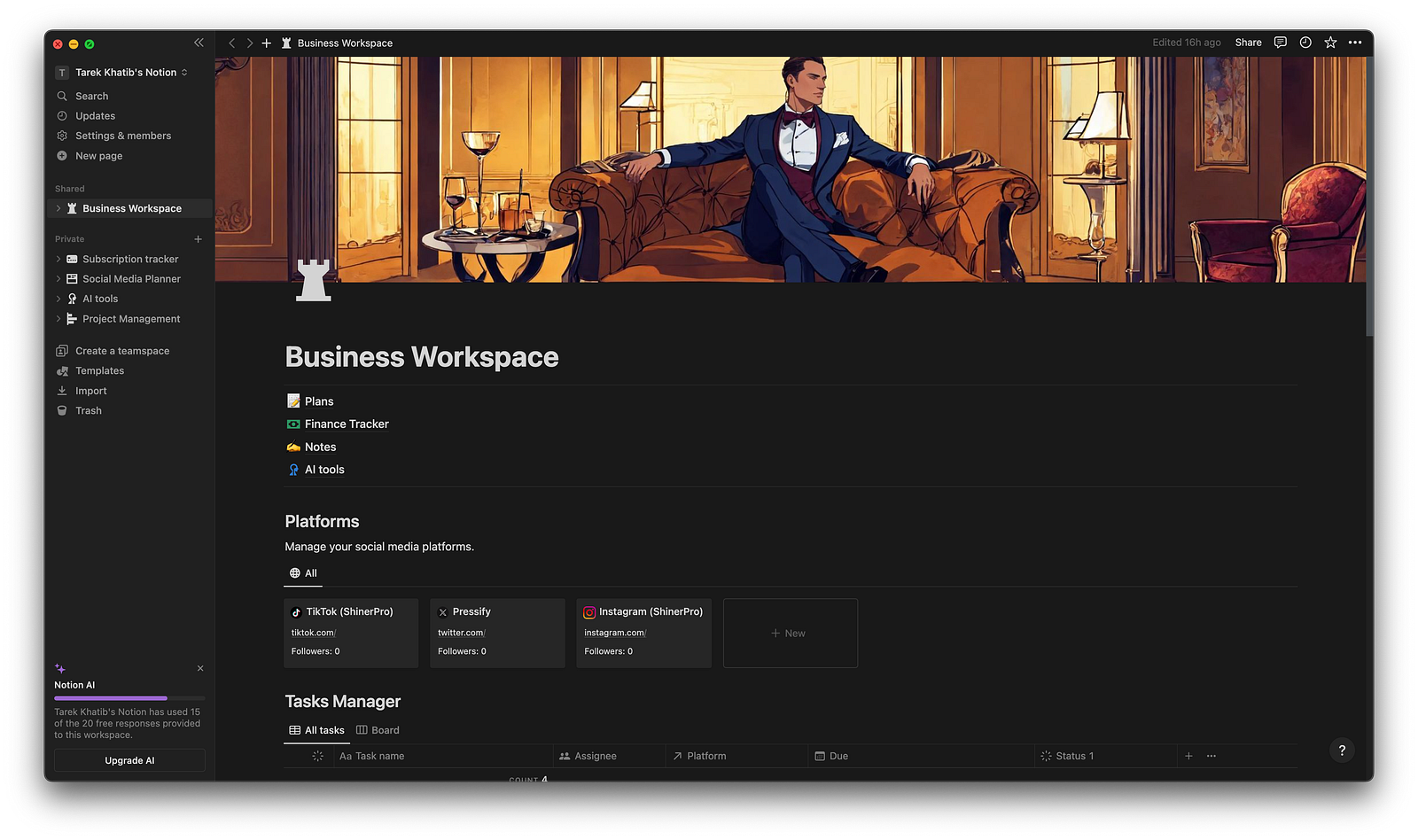
Yes, I use such a cover photo…
You might be already familiar with it;
Notion is an all-in-one workspace that allows users to take notes, and create task lists, wikis, and databases. It synchronizes content across devices and has powerful collaboration features.
Notion stands out for its flexibility to be used for personal productivity as well as for teams. Its intuitive drag-and-drop interface makes it easy to customize your productivity system.
2) Apple Reminders
Free
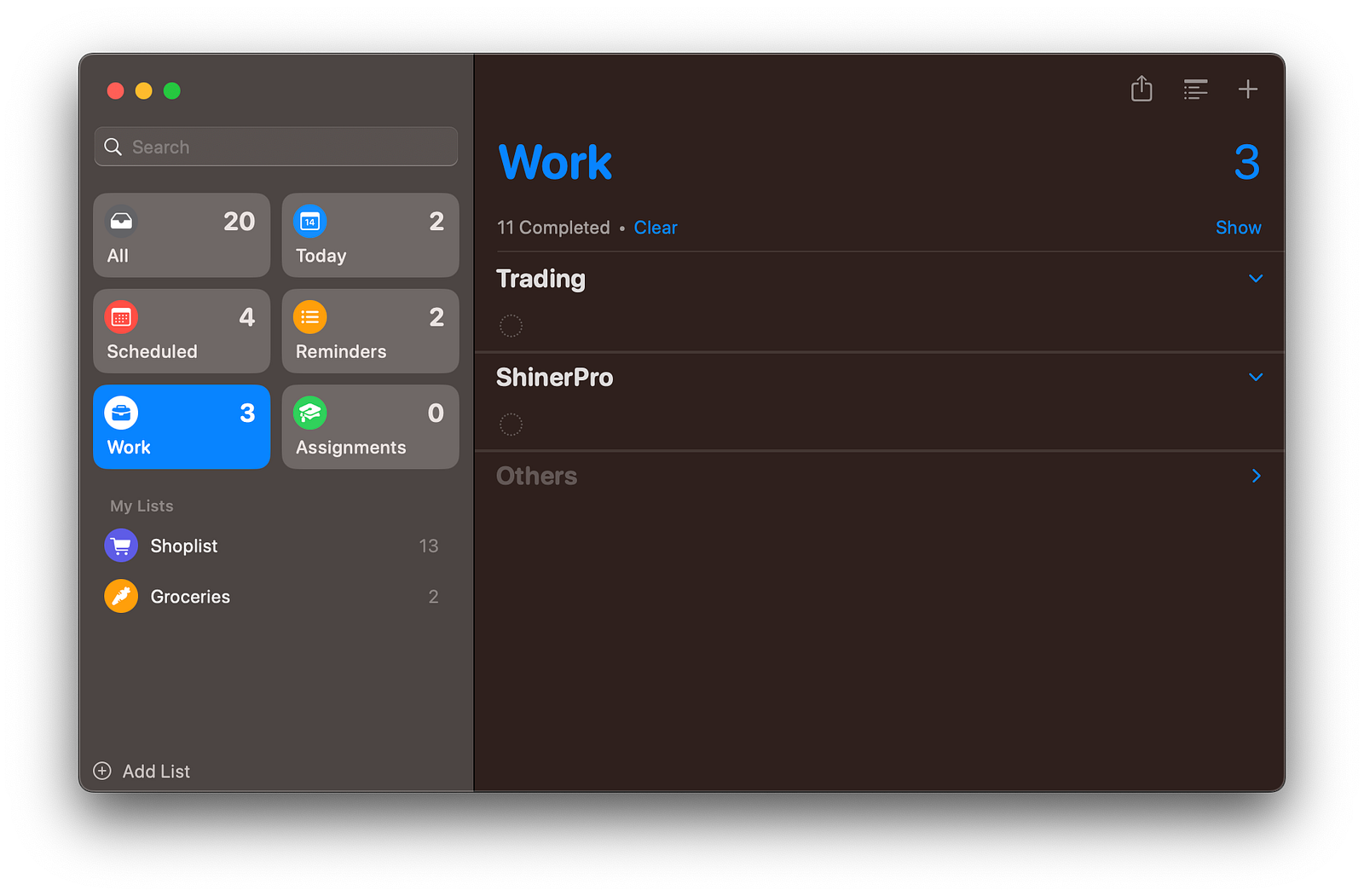
Apple’s Reminders app allows you to create to-do lists, set reminders, and organize your tasks.
No need for any fancy to-do list app, like Things 3 or Todoist…
Apple’s Reminders app integrates with Calendar to schedule reminders. Location-based reminders can trigger when you arrive or leave a location.
Reminders is simple to use but has powerful features like tagging, subtasks, and smart lists to manage priorities.
It syncs across Apple devices for seamless task management.
3) Cron — Debatably THE Best Calendar App
Free
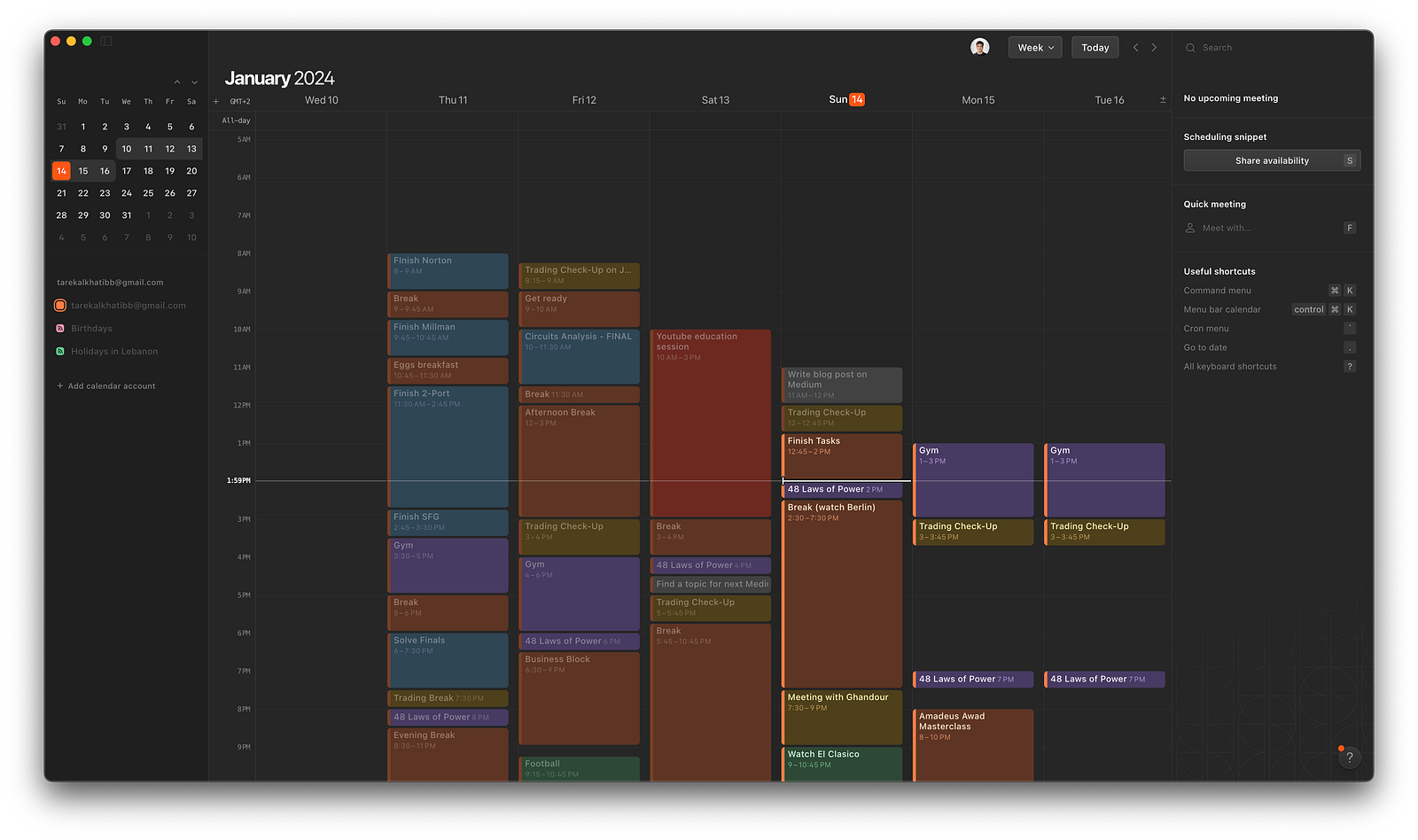
Cron is a smart calendar app powered by AI to automatically schedule meetings and events based on your priorities and availability.
Its quick meeting feature allows you to instantly set up a meeting by typing or speaking details like participants, duration, and agenda.
Cron will handle the back-and-forth scheduling coordination. It also provides insights into how you’re spending time to help optimize your calendar.
Add to that, the endless commands and hidden features this calendar offers, as well as the connectivity to Notion and Google Calendar.
I’ve been using Cron recently, and it’s already a game-changer for me.
4) Day One — Your Daily Life Companion
Freemium
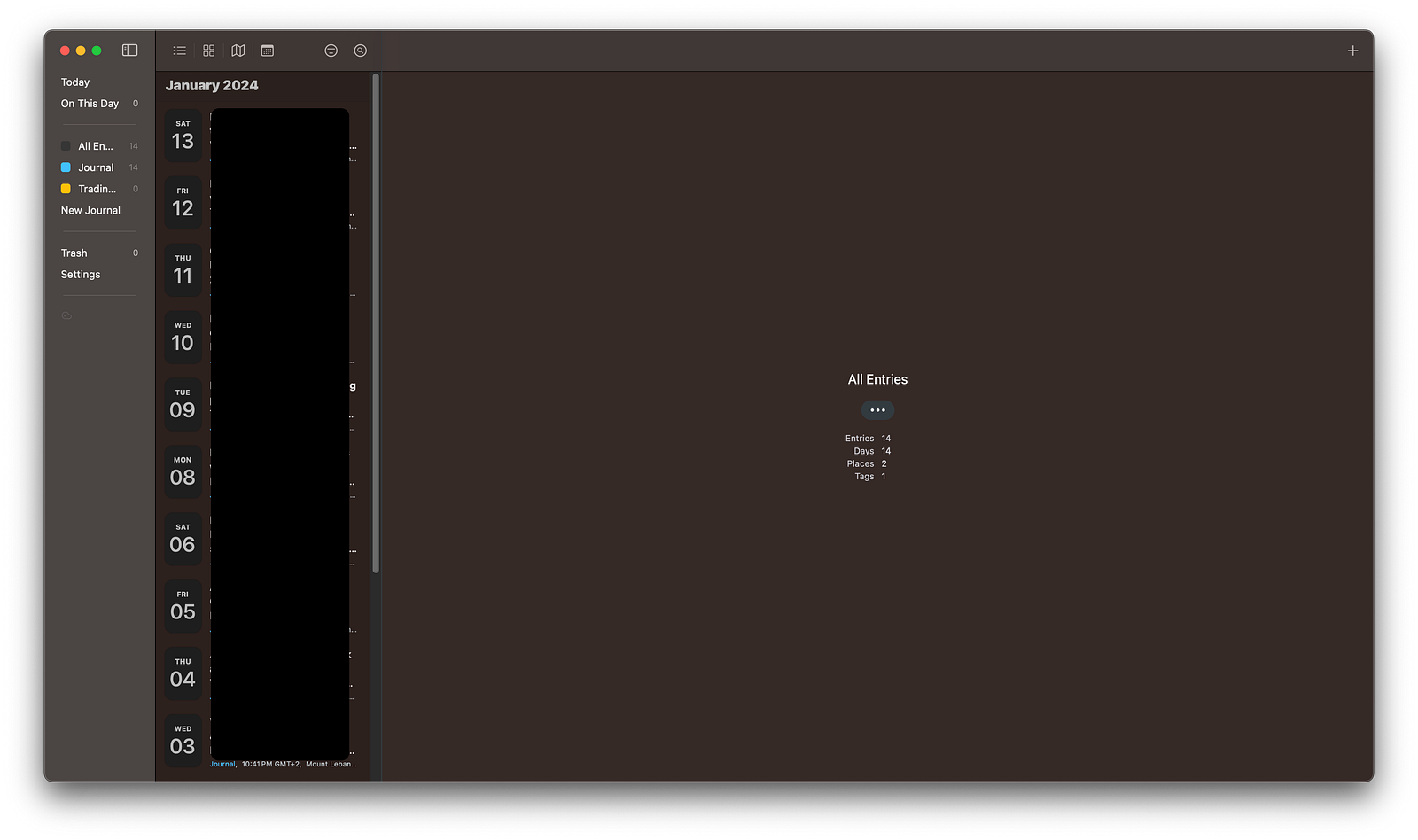
Day One is a popular journaling app that makes keeping a daily journal simple.
It’s user-friendly. It has elegant features like photos, location data, and weather integration to enhance journal entries.
Day One’s automatic backup ensures your memories are safely stored and accessible from any device. Its privacy and encryption features allow you to securely record your private thoughts.
I use Day One to keep track of my personal life, my trading life 🔜 and to possibly write down my own Wikipedia and Plan my life.
This app has simply endless usage possibilities.
If you liked this article, follow me and leave a comment suggesting the next topic I should talk about.

Productivity is about doing more, in less.